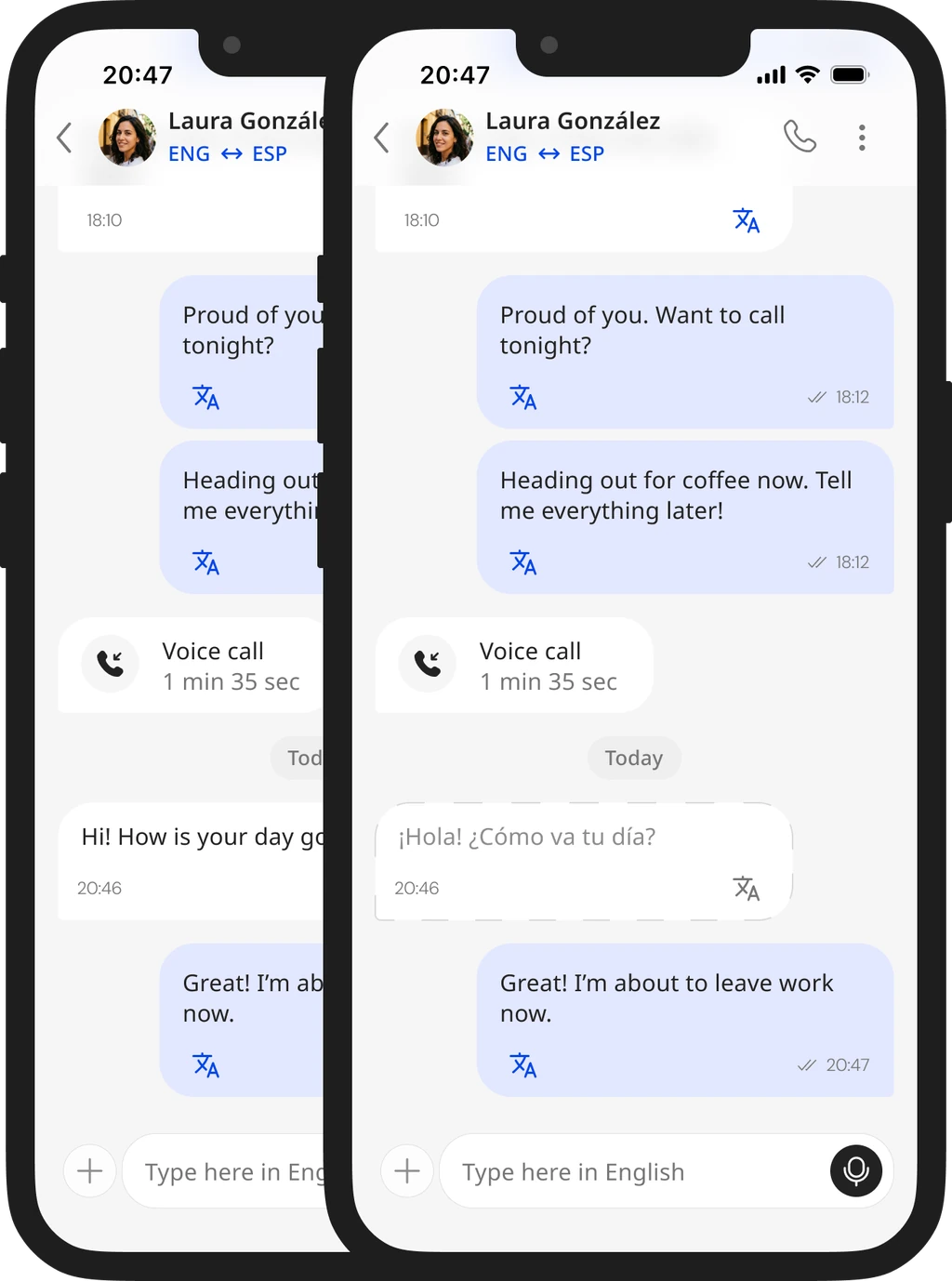
“Did it say what I meant?”
The original text is always one tap away. Translation stays primary; doubt has an exit.
Instead of: both languages in every bubble, which doubles the reading.
Designing trust into a translated conversation. Oralingo is a messenger where everyone writes, speaks and calls in their own language, and the other person receives it in theirs.
Translation stopped being a product.
Apple, Google, Samsung and WhatsApp now translate inside the apps people already use.
What they don’t do is make translation the default of a relationship. It’s still a button you press, a mode you switch on, a feature you have to remember. Oralingo’s bet is the opposite: a conversation where the language barrier simply isn’t part of the interface.
That only works if people trust what an AI says on their behalf. Trust became the design problem.
V1 focuses on partners, friends and family whose closest relationship crosses a language line. They talk every day, often by voice, and every awkward copy-paste into a translator costs them something personal. They’re one of three proto-personas the team built from early assumptions, alongside professionals working across countries and people making friends abroad.
Three proto-personas, narrowed to one focus.
One user to design for.
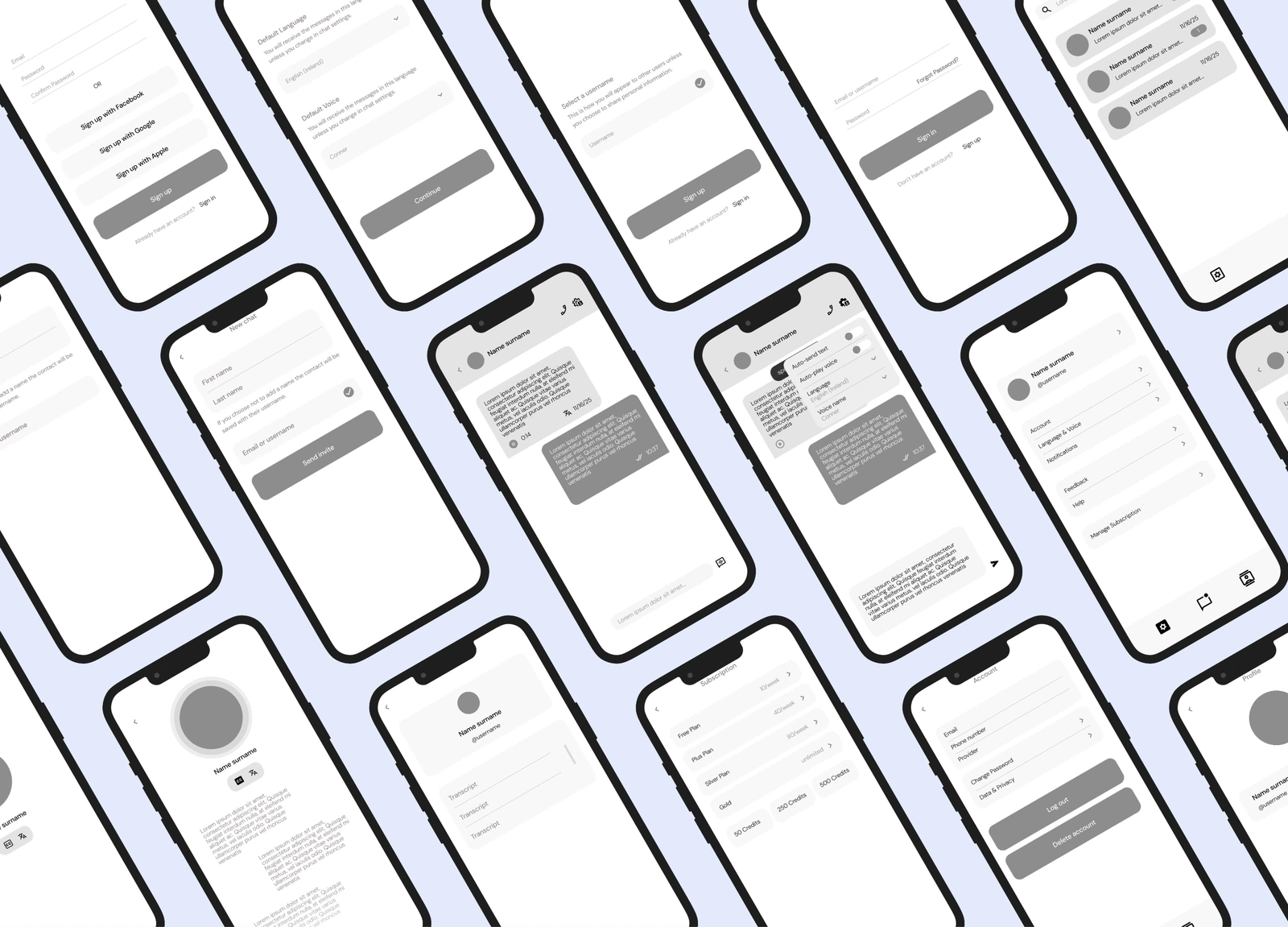
Mapped with and without a navigation bar. Every control sits in one of three places: global, per contact or in the chat.
Settings where you need them.
Every flow from sign-up to calls, with a floating pill for navigation instead of a full tab bar.
Every state designed.
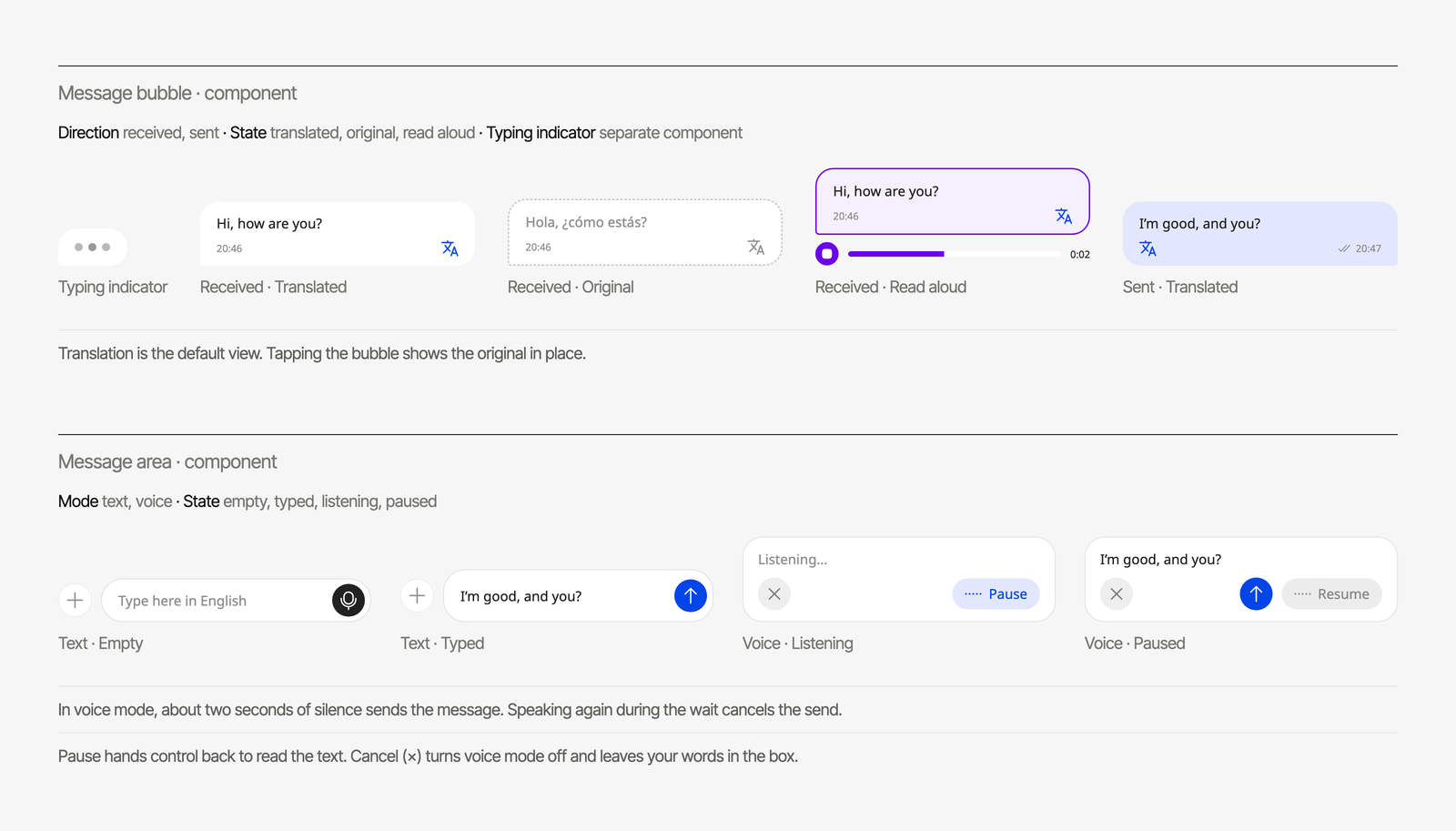
Shared components, with each state specified for engineering.
Live on iOS and Android.
Oralingo
Chats
Conversation
Opened from the chat list
New chat
Settings
People only rely on a translation if they trust it. Each decision answers a question they ask.
The original text is always one tap away. Translation stays primary; doubt has an exit.
Instead of: both languages in every bubble, which doubles the reading.
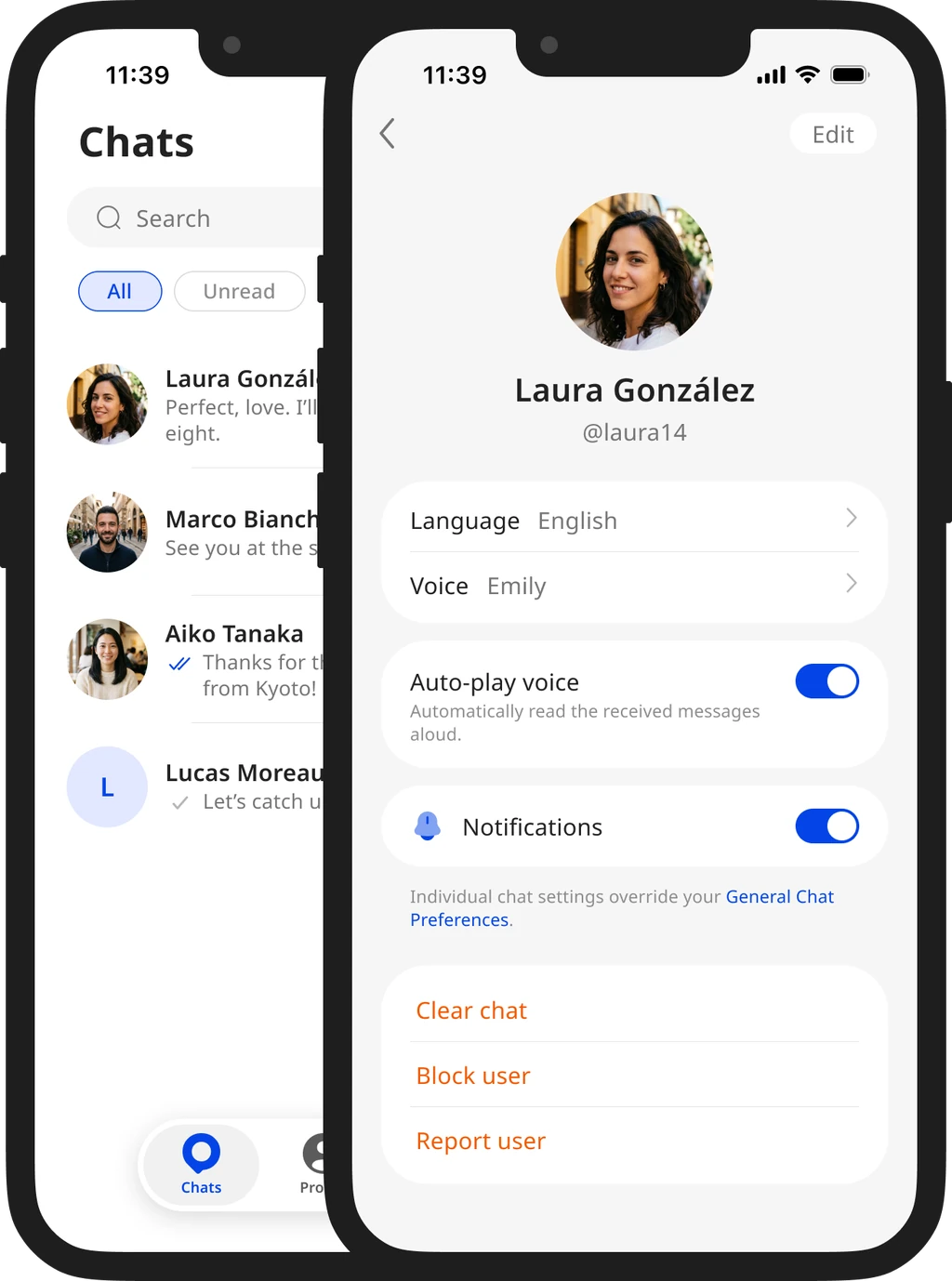
For each person, you choose the language their messages arrive in and the voice you hear. Switching chats never means changing settings.
Instead of: one global setting, which breaks as soon as you talk to two people in different languages.
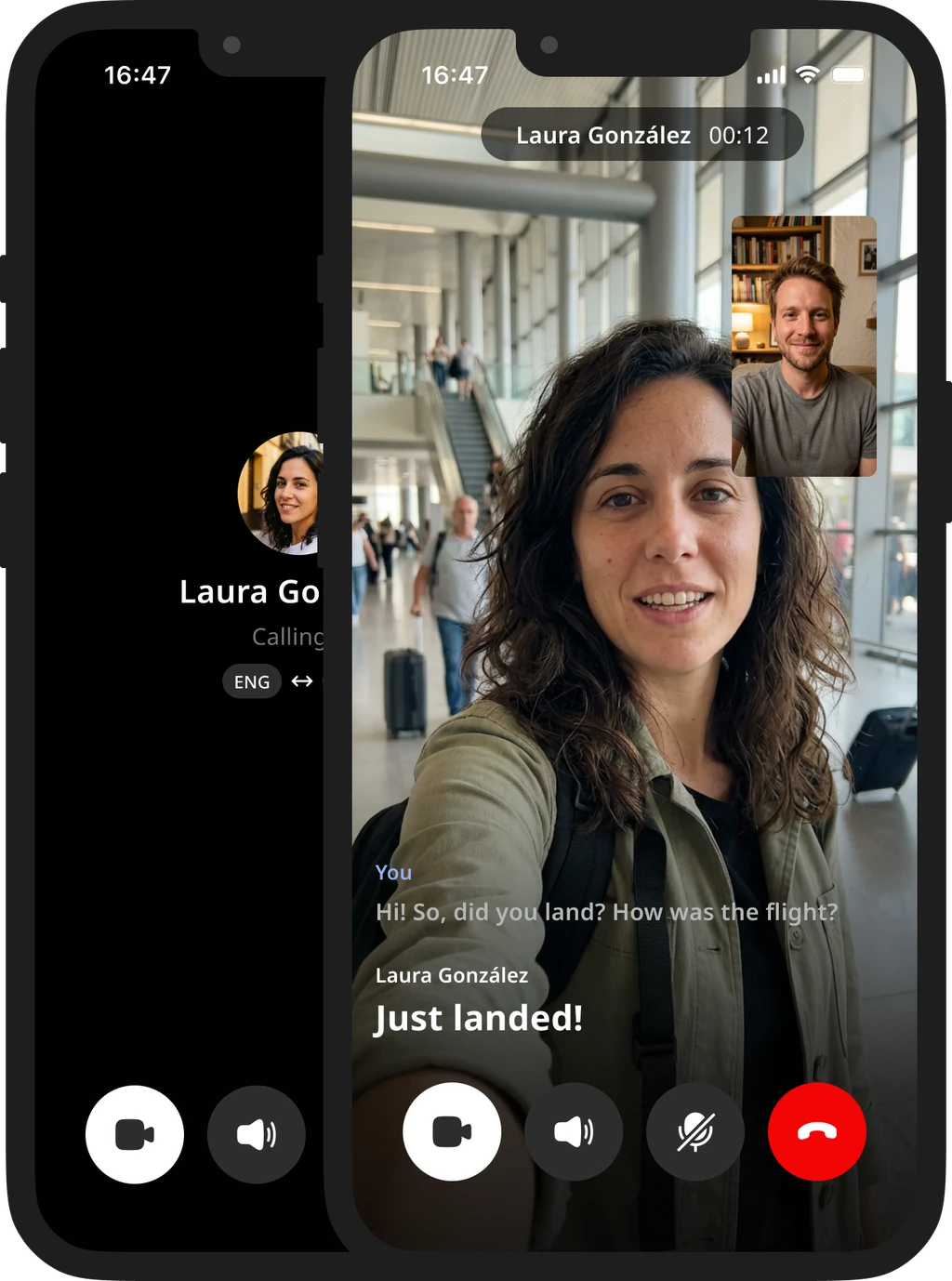
Calls keep the person’s real voice, with captions in your language. You hear the tone and read the words.
Instead of: replacing their voice with a generated one, which loses their tone. A translated voice is coming as an option.
Every translated voice costs money to generate. That kept audio a choice, set per chat or used in voice mode, and is why longer voice use runs on credits.
A compact system keeps 100+ languages readable: Noto Sans so every language’s script displays correctly, electric blue for the brand and primary actions, purple for audio, and components built for every state a translated message can be in.
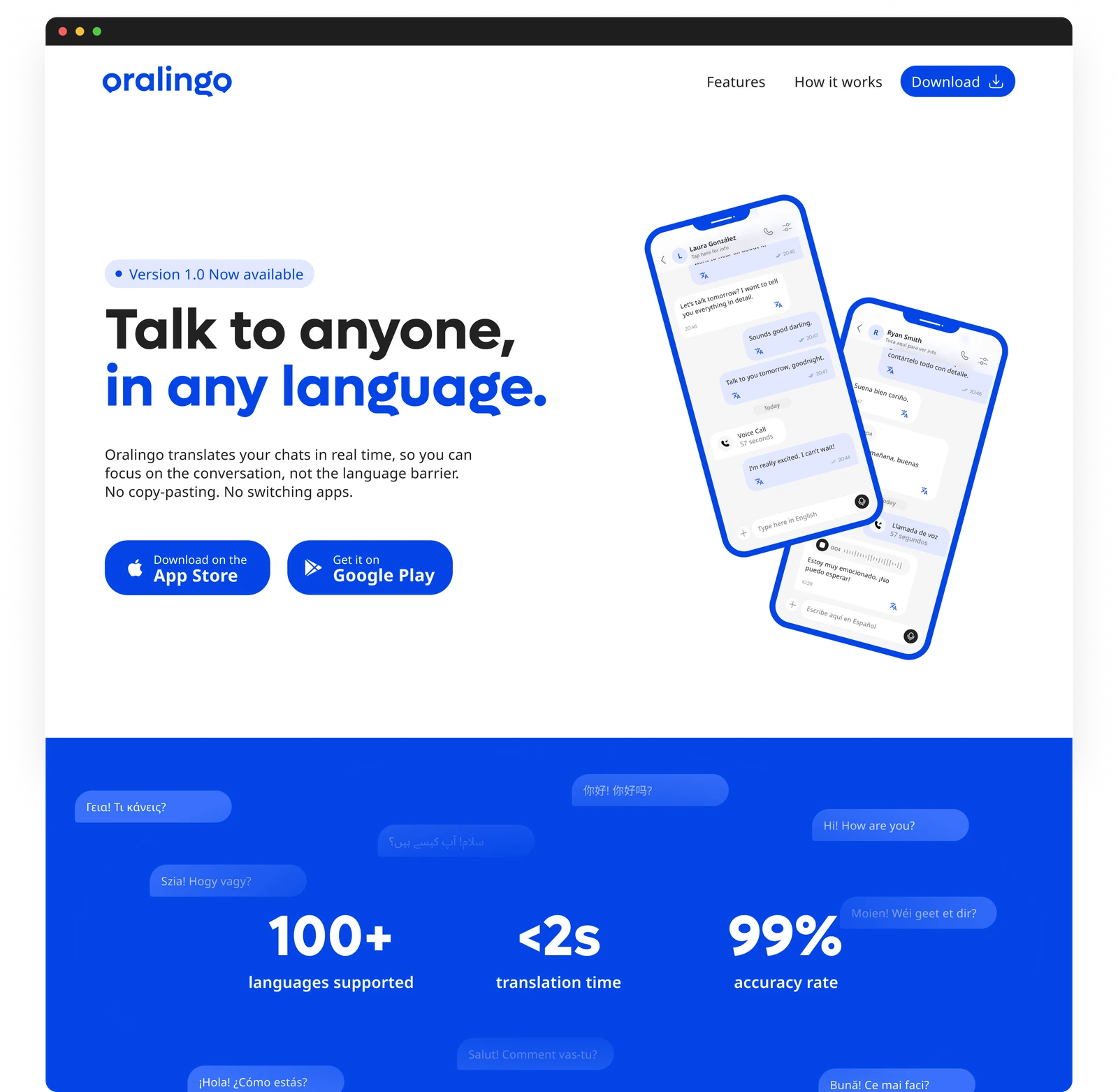
Beyond the app, I designed the launch: the marketing site, the App Store and Google Play listings with keyword strategy, and the two-sided launch video prototype that shows both people in one conversation.
Oralingo launched on the App Store in May 2026 and is live on iOS and Android.
Usage data isn’t public yet. I’d watch three signals: whether invited people reply, whether fewer people open the original over time, and how many pairs talk every week.
Then carry the same trust decisions into group chats, so everyone reads and hears the others in their own language.
We’re also debating whether voice mode earns its place. I’d settle it with data: how often people talk instead of type, and whether those conversations last longer.