Awareness
Make it easy to say yes.
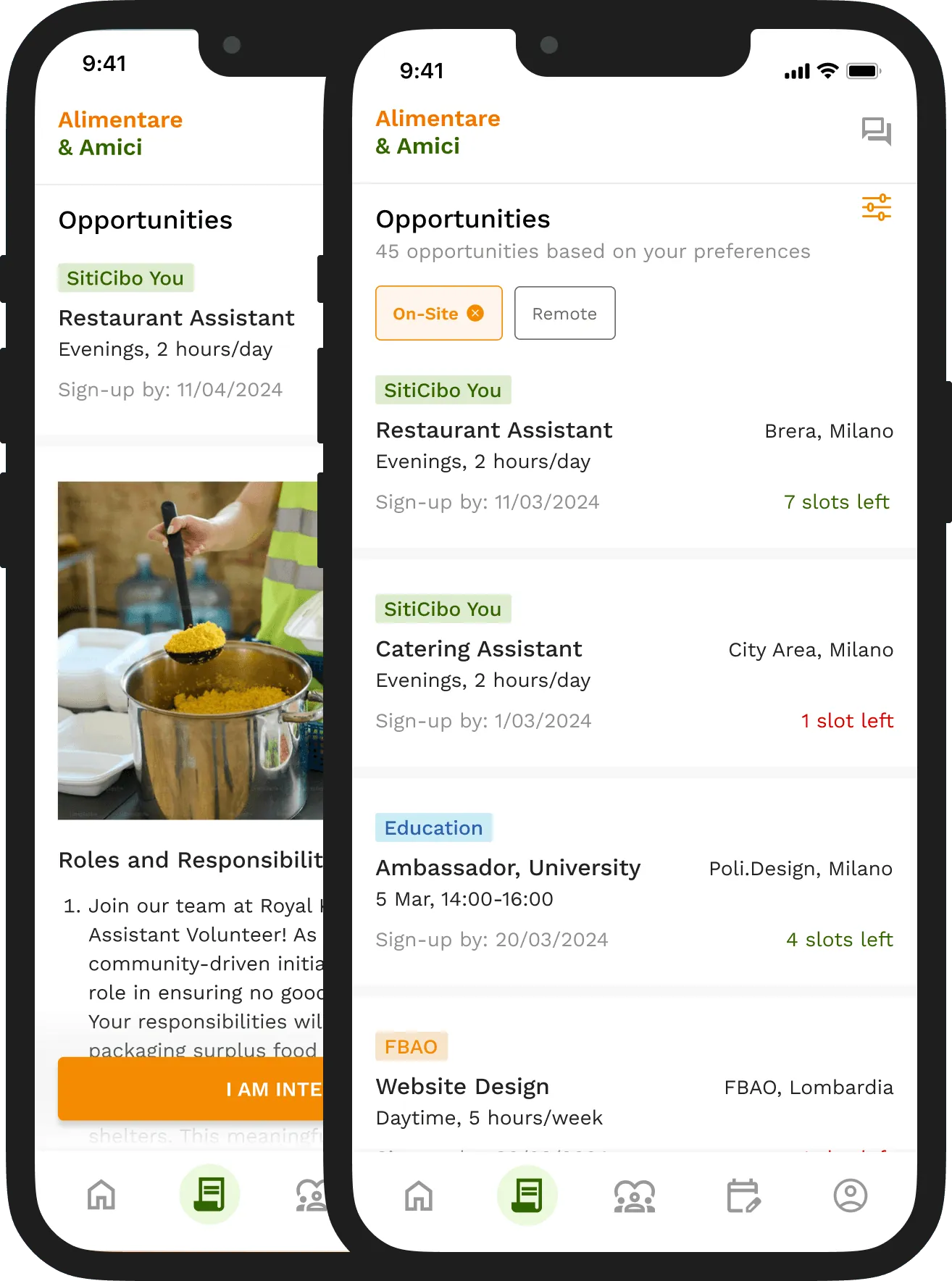
Time, not willingness, stopped people from volunteering. So the first step is small and clearly scoped.
In the app: short roles with set hours, open slots, clear sign-up dates and what each role involves.
A service and app concept for Banco Alimentare, Italy’s food bank network.
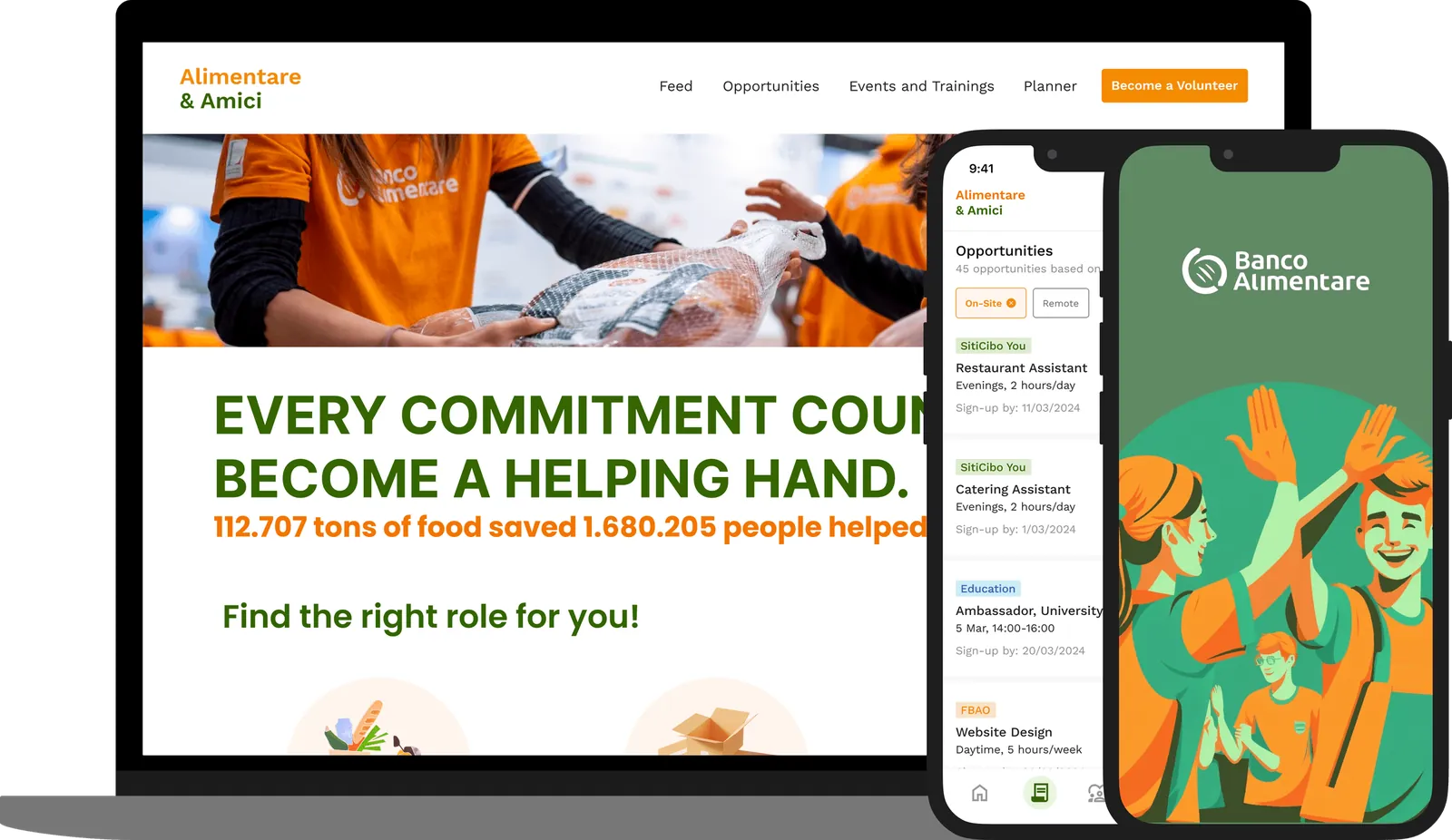
Banco Alimentare relies on thousands of volunteers, but most help once and never return. Alimentare & Amici is a website and app that guide people from a first, low-commitment shift to a lasting role in the community.
The brief was to streamline volunteering. Research showed the real problem: volunteers didn’t come back. So we designed for retention, not recruitment.
Field research with Banco Alimentare turned the question around. Finding volunteers wasn’t the hard part; keeping them engaged was.
Retention, not recruitment.
Interviews with volunteers and Banco Alimentare staff showed why people come back, and why they don’t.
Four drivers of return.
We mapped the volunteer experience across three stages, awareness, engagement and retention, and built a service blueprint around them.
A three-stage service blueprint.
Each stage became one principle for the website and app: make it easy to say yes, make it social, make impact visible.
Three design principles.
Keeping volunteers is harder than finding them.
Interviews showed what would bring them back.
Impact
People want to see their impact.
They want their time to make a meaningful, positive contribution.
Time
Time is the barrier, not willingness.
Long commitments keep people from coming back.
Community
Volunteering is social.
People stay for each other, and for like-minded company.
Recognition
Recognition brings people back.
Volunteers want to be recognised for what their time achieves.
Awareness
1Discover
Touchpoints
Social media, the website
Volunteer
Finds out about volunteering and joins an open event, with no long commitment.
Website and app
Explains what volunteers do and lists upcoming open events.
Banco Alimentare staff
Run open events and promote them online.
Systems
The website links straight to the app.
2Sign up
Touchpoints
Sign-up form in the app
Volunteer
Creates a profile with the days, times, skills and interests that suit them.
Website and app
Asks only for basic details and preferences.
Banco Alimentare staff
Check new volunteers before their first shift.
Systems
A volunteer database stores profiles and preferences.
Engagement
3Find a role
Touchpoints
Role list in the app
Volunteer
Picks a role that fits their week and applies.
Website and app
Recommends roles and shows the hours, open places and what each one involves.
Banco Alimentare staff
Create short, clearly scoped roles.
Systems
Matches roles to each volunteer’s preferences and skills.
4Volunteer together
Touchpoints
Group events and trainings
Volunteer
Volunteers alongside friends, classmates or colleagues.
Website and app
Lists group events and trainings to sign up for.
Banco Alimentare staff
Organise group days with schools, universities and companies, and run trainings.
Systems
Schedules people and shifts.
Retention
5See the impact
Touchpoints
Profile, badges, certificates
Volunteer
Sees the hours they gave and the food they helped save.
Website and app
Turns each shift into visible impact: hours, food saved and badges.
Banco Alimentare staff
Thank volunteers regularly.
Systems
Records hours and awards points.
6Come back
Touchpoints
Community feed
Volunteer
Shares the day, thanks others, invites friends and books the next shift.
Then back to step 3.
Website and app
A feed for stories and thanks, plus suggestions for next week.
Banco Alimentare staff
Host community events and reward volunteers who bring friends.
Systems
Suggests shifts that fit each volunteer’s availability.
Each stage of the volunteer journey became one design principle. The website brings people in; three sets of app screens show how each principle works in practice.
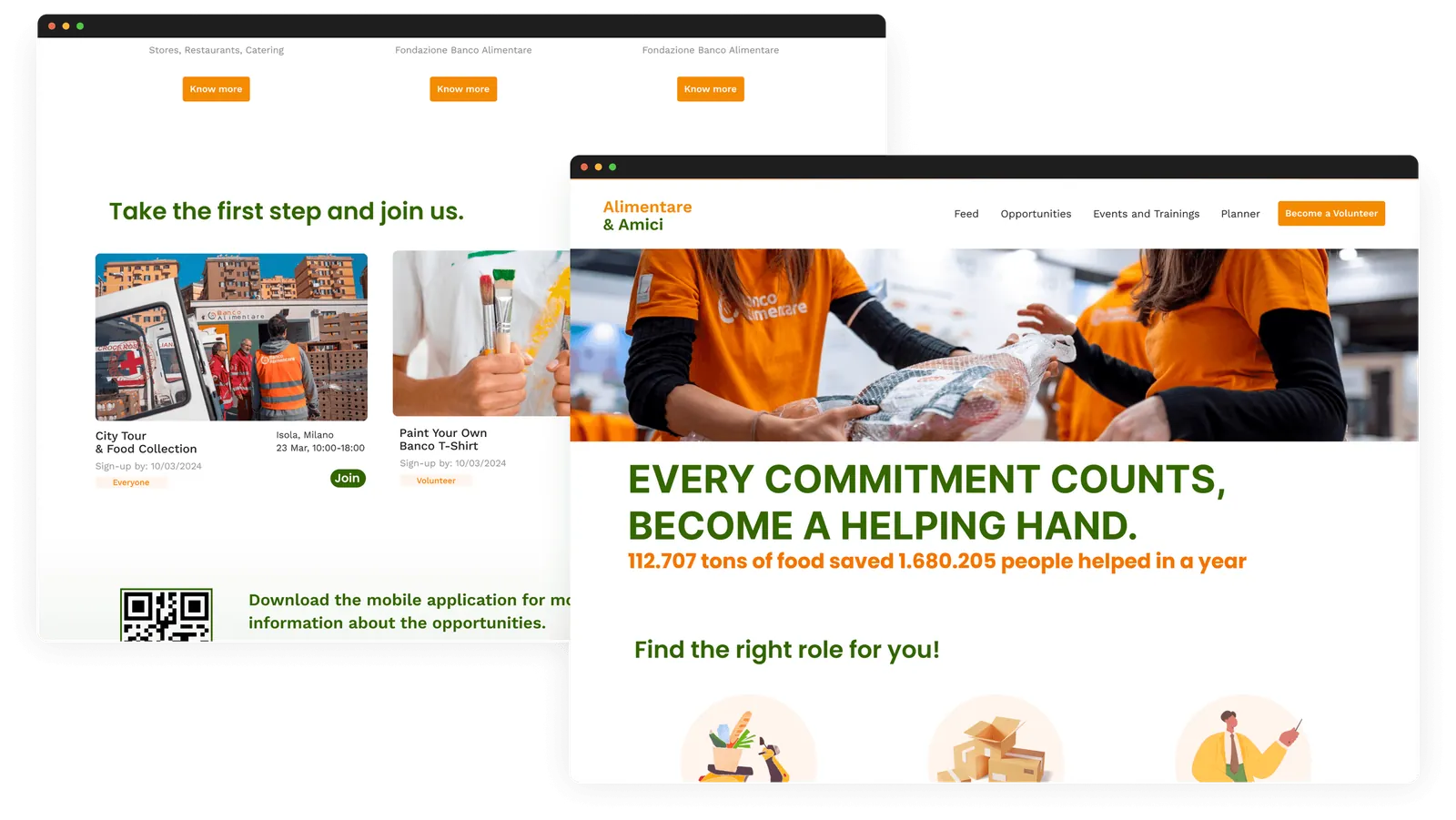
The website: where people find out about volunteering and join their first open event.
Awareness
Time, not willingness, stopped people from volunteering. So the first step is small and clearly scoped.
In the app: short roles with set hours, open slots, clear sign-up dates and what each role involves.
Engagement
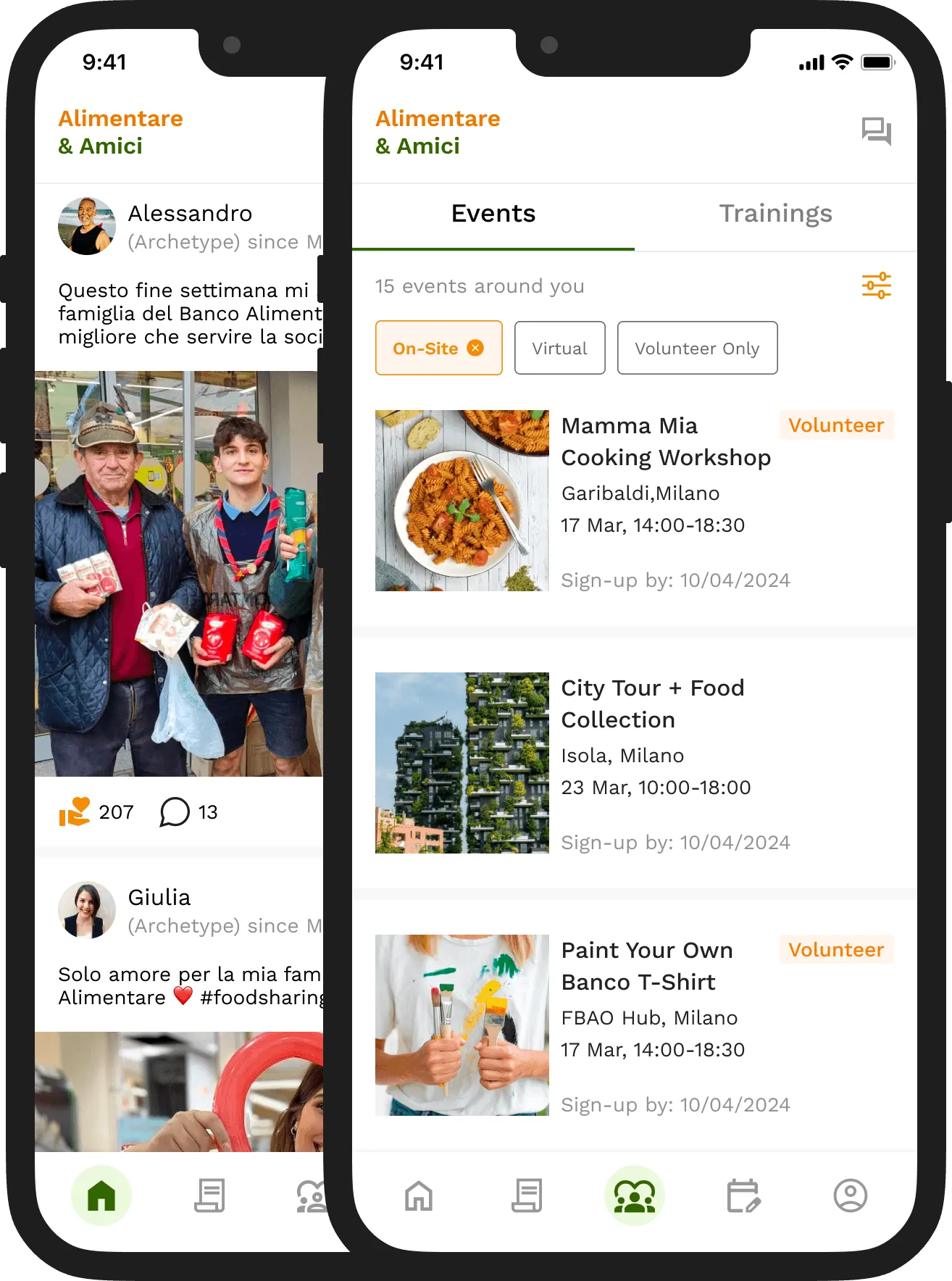
People stay for each other. Volunteering becomes something you do with friends, classmates and colleagues.
In the app: a community feed, group events and trainings, and school partnerships.
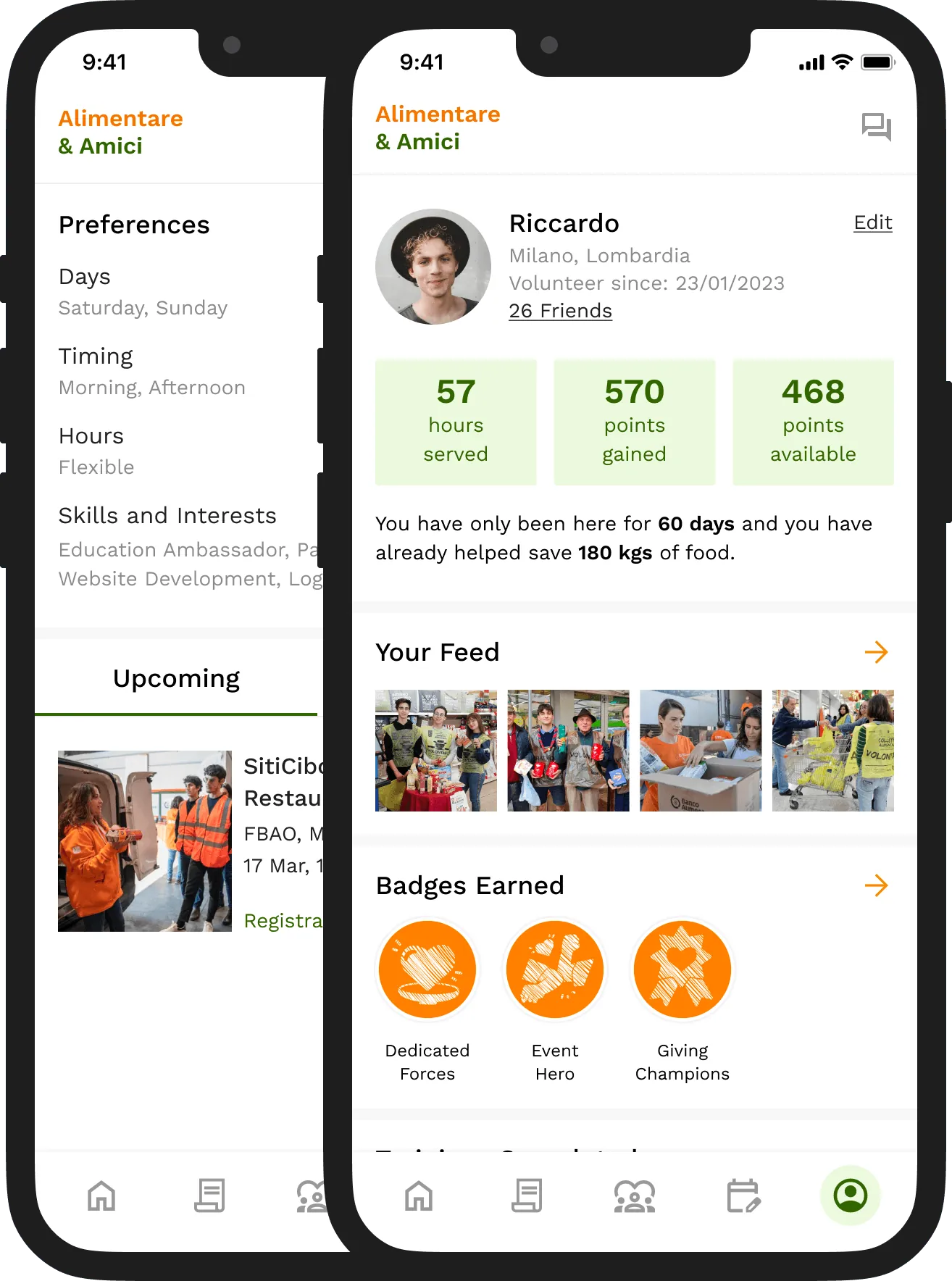
Retention
Volunteers want to see what their time achieves, and to be recognised for it.
In the app: hours served, food saved, points and badges, and roles matched to personal preferences.
A new role that brings small shops and restaurants in: local part-time volunteers collect their surplus food and bring it to Banco Alimentare.
What restaurants and shops told us
Their surplus is small and most already sell it at a discount or give it away. A few had never heard of Banco Alimentare, and donating takes effort, from sorting the food to waiting late for a pickup.
Open question
Food safety rules make small, informal donations hard for Banco Alimentare to accept.
Volunteer engagement is a service problem, not just an interface problem: the app only works if the organisation behind it can deliver on its promises. Next, I would test matching and recognition with real volunteers and pilot the school partnerships.